



Rondabox 200x100x80 cm Raised Bed Wooden effect
What do the statuses mean?
- Available In stock and ready to ship.
- Other combination In stock in another combination - change your selection.
- Pre-order available Not yet available, but you can reserve it now - it will be shipped on the expected date.
- Restocking soon Temporarily out of stock, we expect to restock it soon.
- Not available Discontinued and can no longer be ordered.

Additional services for your product
Choose extra services to protect and extend the life of your product.-
Note: Product is functional + has signs of wear
Details: Product may have a cosmetic damage (e.g. small scratches) on top, front or sides. The original box may be damaged or repacked. Additionally, some parts may be missing such as the user manual, network cable, remote control, filter. Product comes with a 1-year warranty£ 95.99 (incl. VAT)
- Low stock - order quickly! In stock and ready for you! Order now and enjoy your purchase without delays. Low stock - order quickly!
- Shipping time: 3 - 4 days Receive it sooner than you think. Don’t miss this opportunity, order now! Receive it sooner than you think. Don’t miss this opportunity, order now!
- 14 day cooling off period
Top features
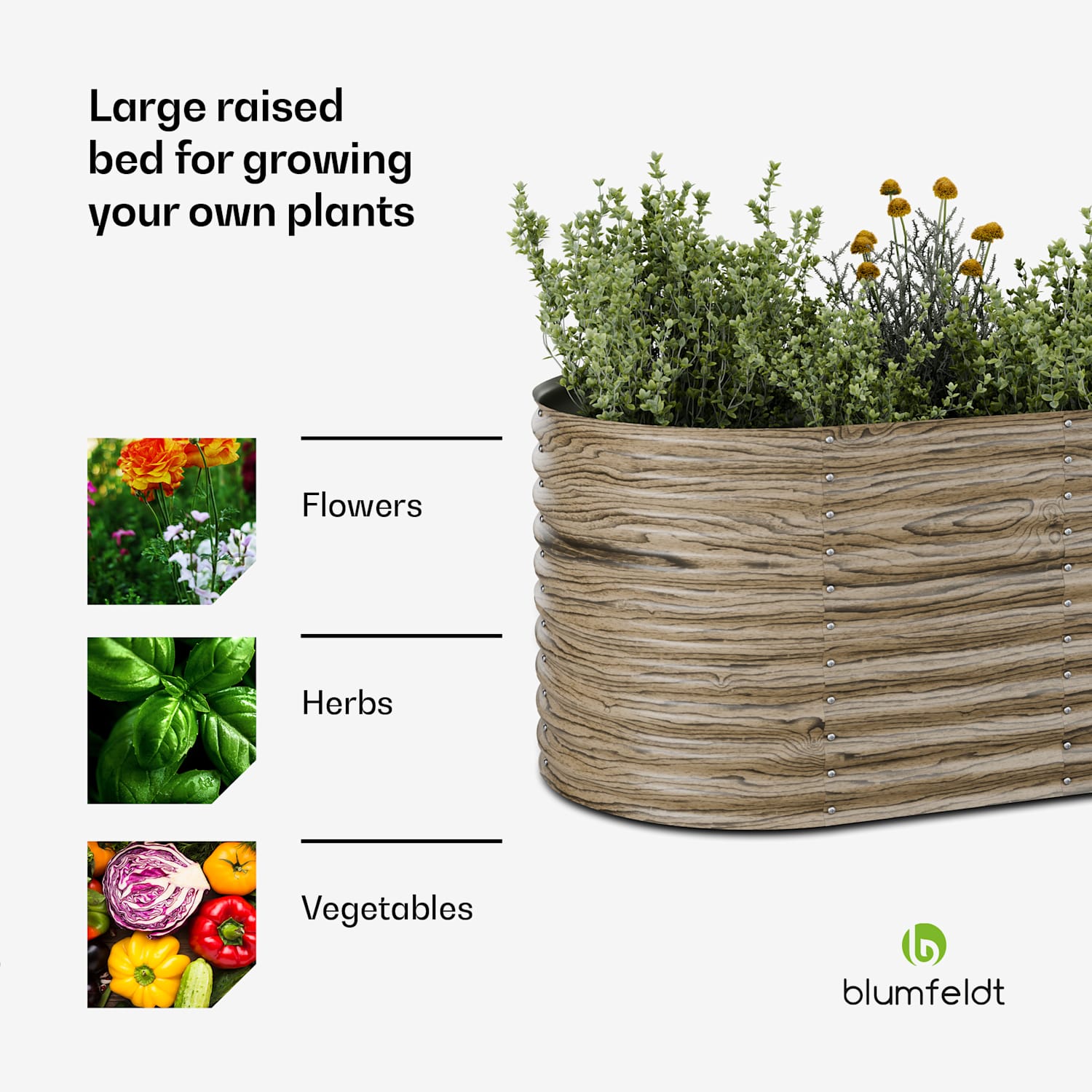
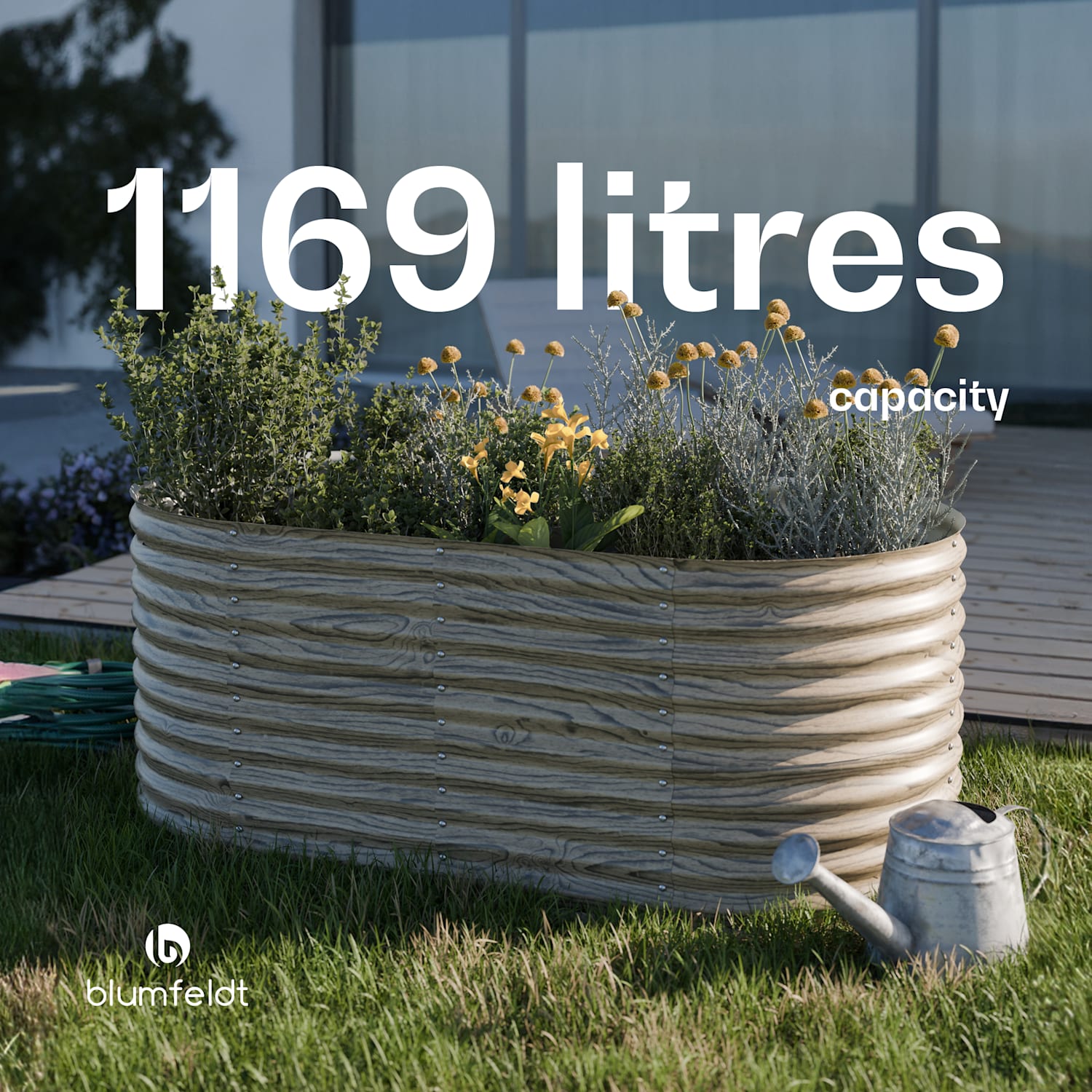
Room for a whole harvest: With a capacity of 1,169 litres, the oval raised bed offers ample space for flowers, herbs, and vegetables – whether on the balcony, terrace, or in the garden.
Weatherproof all year round: Made from 0.6 mm thick galvanized steel, the raised bed withstands rain, frost, and UV radiation – without rusting or weathering, season after season.
Roots grow unhindered: The open base structure reliably drains excess water and allows roots to penetrate deeply into the substrate – for healthy, vigorous plant growth with a bed depth of 28–35 cm.
Back-friendly gardening: The elevated design brings the plants to a comfortable working height – no kneeling, no bending. Ideal for anyone looking to relieve their back while gardening.
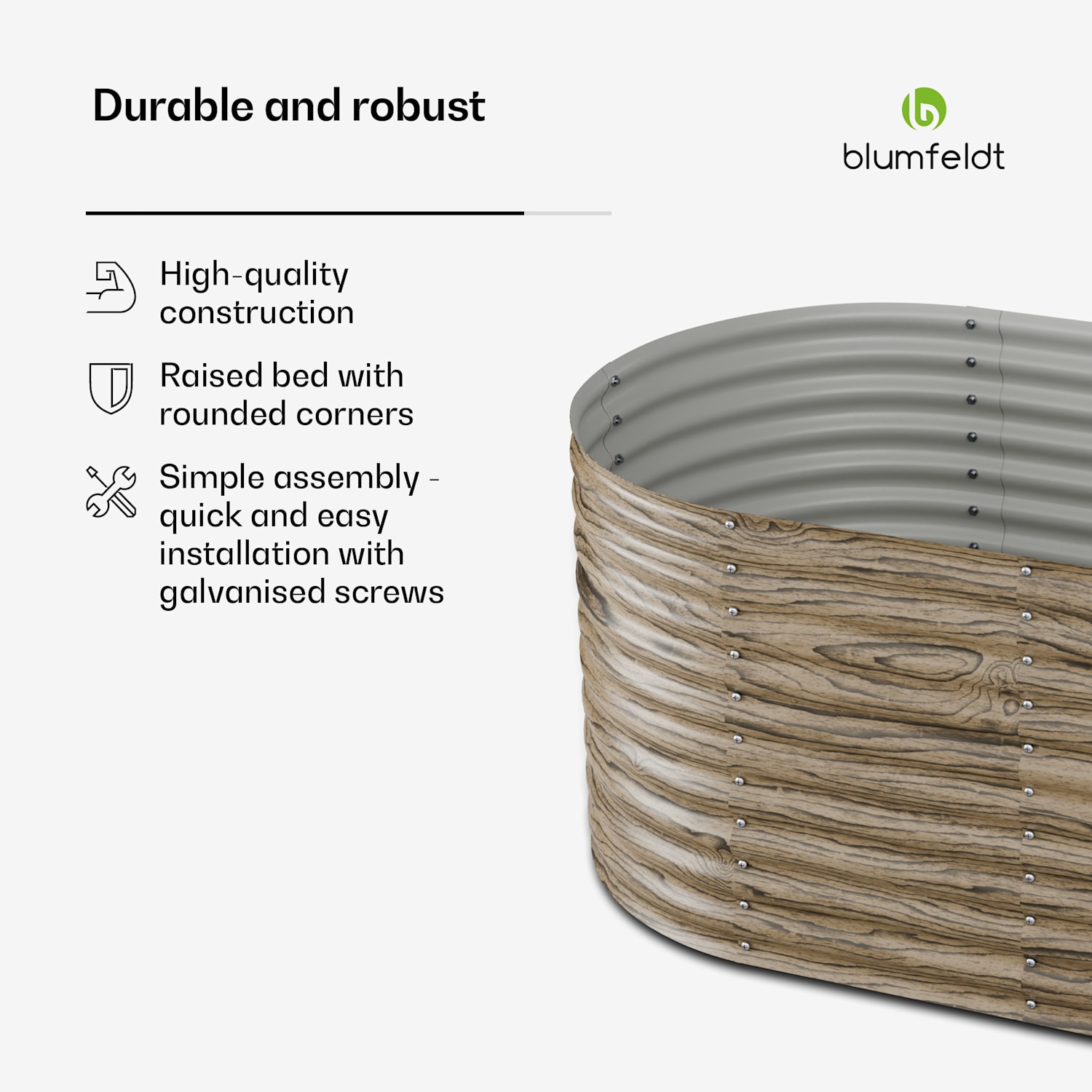
Quickly assembled, securely fastened: Thanks to folded safety edges and sturdy corner joints, assembly is possible without special tools – safe and straightforward, even for gardening beginners.
Product description
Back pain after weeding, knees in damp soil, no space for a proper garden – it doesn’t have to be this way. The Blumfeldt High Grow raised bed brings gardening to your level: comfortable, weatherproof, and perfect for balcony or terrace.
With a capacity of 1,169 litres, the oval raised bed offers enough soil for tomatoes, lettuce, herbs, and root vegetables – no digging, no garden plot needed. The working height protects your back by eliminating the need to kneel or bend. A bed depth of 28–35 cm provides even deep-rooted plants with ample space to fully develop.
The construction from galvanised steel – wall thickness 0.6 mm – withstands rain, frost, and UV radiation year after year. The open base structure ensures optimal water drainage and unlimited root growth into the soil beneath. Corner joints with sturdy metal anchors keep the bed securely together even after years. If desired, a ground grid can be retrofitted to keep moles and weeds out from below.
The modular system can be combined with additional beds and shaped into almost any form – ideal for city gardens, roof terraces, or terraced house gardens. Whether a herb spiral on the balcony or a vegetable patch in the front garden: the Blumfeldt High Grow adapts to your needs.
Especially popular with urban gardeners, balcony plant lovers, and anyone who finds traditional gardening physically too demanding. And a tip: as a housewarming gift for a home with a garden, this raised bed is hard to beat.
Get the Blumfeldt High Grow and experience how uncomplicated gardening can be – delivered directly to your home.
Features
- Material: galvanized steel
- Colour: wood effect
- Shape: oval
- Volume: 1,169 litres
- Side panel wall thickness: 0.6 mm
- Corner panel wall thickness: 0.6 mm
- Bed depth: 28–35 cm
- Safety edges: folded upwards
- Installation type: upright installation
- Installation: easy, without special tools
- Open base structure: yes
- Suitable for: garden, terrace or balcony
- Year-round outdoor use: yes
- UV and weather resistant: yes
- Ergonomic design: yes
- Product type: raised bed
Dimensions and Technical Details
Product dimensions: 100 x 80 x 200 cm (W×H×D)
Weight: 26 kg
What will be delivered?
-
Raised bed
-
Screws
-
Nuts
-
Washers
-
Assembly instructions
Delivery & shipment
Shipping time: 3 - 4 days